RPG Racing Engines builds a potent Coyote for the Fox v Ferrari Mustang. This turbocharged engine targets 900 horsepower and beyond.
For those following the build of the 1990 Mustang LX coupe charged with taking on exotics in this season of Horsepower Wars: Fox v Ferrari, you know this project is making progress. Now it is time to build an engine capable of fulfilling its mission, so RPG Racing Engines got the call to create a robust Gen 3 Coyote based on the vaunted Predator 5.2-liter block created for the S550 GT500.
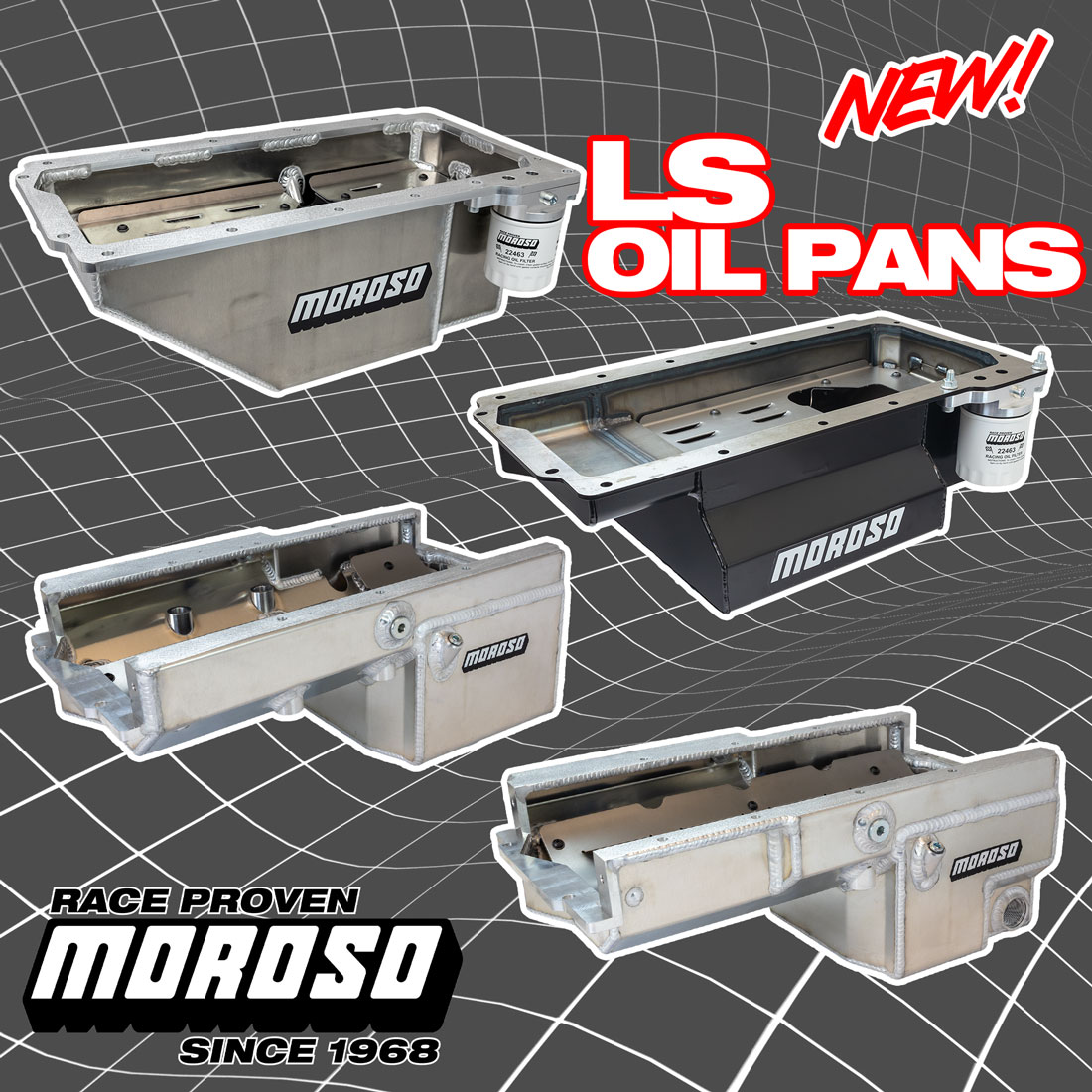
Moroso added four new LS oil pans for sand rails, street/strip, road race and drag race builds, including Dart LS Next non-skirted blocks.
Nobody pops the hood at a car show and points at the oil pan. It sits down in the dark where the dirt is, only to get ignored until something goes wrong. Then it becomes the most interesting part of the engine. Moroso has four new wet-sump LS oil pans in the lineup, and between them they cover sand rails, street and strip cars, road race builds, and drag-only combinations. Two of the four bolt to GM LS Gen III and Gen IV blocks, as well as the Dart LS Next Gen 3, while the other two are built specifically around the non-skirted Dart LS Next and LS Next 2.
For many enthusiasts, it’s little more than the thing that keeps oil from spilling all over your garage floor. But as horsepower climbs, cornering loads increase, or a car starts seeing regular track duty, the oil pan becomes one of the most important components in the entire lubrication system.
That’s because an oil pan does far more than simply store oil. It also has to control where it all goes under acceleration, braking, and cornering. And it has to keep that oil around the pickup — nice and unaerated — so the oil pump can pull it up and provide your engine with a steady stream of lubricant. It has to survive encounters with speed bumps, road debris, and, if you’re a drag racer, the occasional hard landing after your excellent suspension tuning allowed you to pull your first wheelstand. It also has to fit around crossmembers, the steering linkage, suspension components, and make room for stroker crankshafts without creating installation headaches.
"Like any motorsport, drifting continues to evolve. While some drift cars are purpose-built from day one, others, like the sport they champion, progress through trial and error, broken parts, and stubborn determination. Officially billed as a Formula Drift PRO Toyota 86, this Scion FR-S is a poster child for the growth of both driver and machine. What started as an ordinary, 100K-mile Florida commuter has transformed into a full-spec, 800 horsepower pavement scorcher that’s powered by 440 cubic inches of Dart LS. More importantly, though, the car tells the story of how persistence and constant development can slowly turn a grassroots effort into a professional-level contender."
"The factory oil pan that came on our Chevrolet Performance L8T was designed for a 3/4-ton truck. The cast aluminum construction is designed to last a lifetime, but not designed to properly handle the engine oil when it’s subjected to the g-forces generated by hard acceleration. So we went to the biggest name in the business for oil control: Moroso."
"When we first set out to build our high-revving 327ci small-block Chevy for Project Mighty Mouse, oil control wasn’t the flashiest part of the plan. But once we started assembling a package that could spin reliably to 7,500 rpm, we knew it had to be a priority, especially having a windage tray. That meant rethinking everything below the crank centerline – especially when space constraints and mismatched parts nearly derailed the build. Luckily, Moroso had the exact solution we needed."
In this video featuring our in-house oil pump test stand, we take a deeper dive into oil system temperature an the effect it can have on oil flow. The results may surprise you!